








Diamond Fluorescence
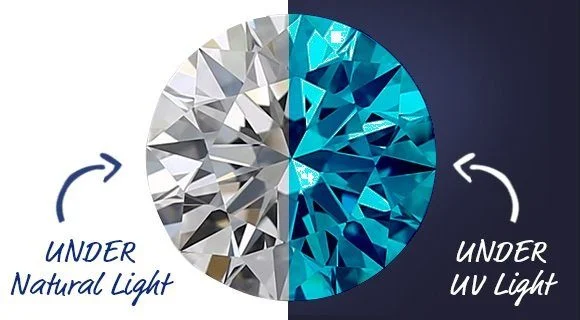
Fluorescence is the tendency of a diamond to emit a (soft) glow when exposed to ultraviolet light (UV light). The fluorescence effect is present in over 30% of diamonds and is an important consideration when buying a loose diamond.-
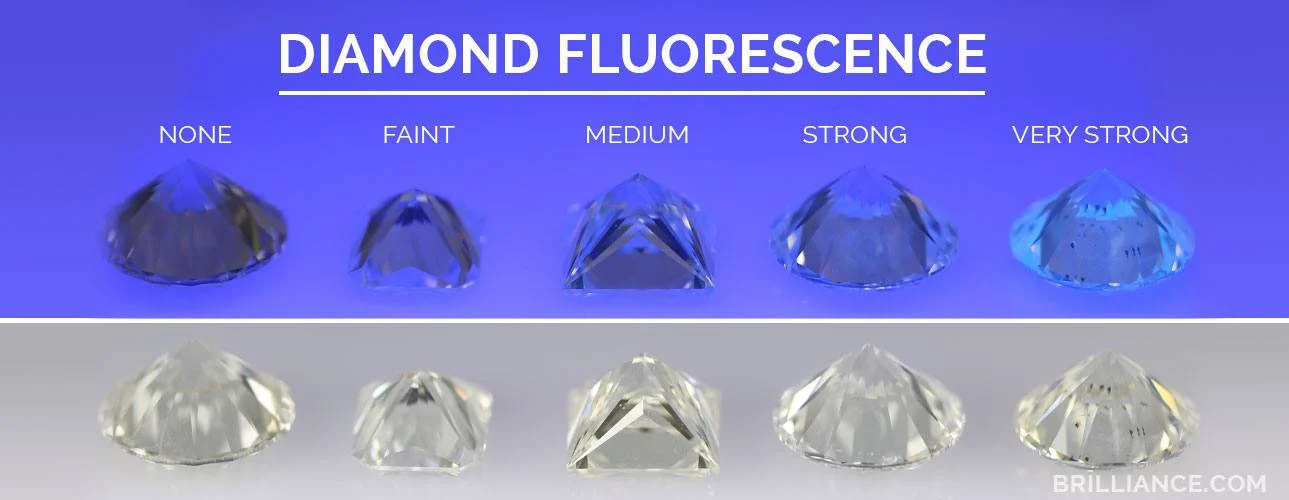
When UV light strikes a diamond with fluorescent properties, the stone emits a glow. Most often blue, it can also be shades of green, yellow, white or red. Fluorescence can occur in different intensities. Gemological laboratories like the GIA rate diamond fluorescence on a scale from "None" to "Very Strong". (Want to speak with a diamond expert? Call 866-737-0754 for expert advice on fluorescence.)
- None, Nil, Negligible
- No fluorescence, no influence on color.
- Faint, Slight
- Weak fluorescence, not a significant influence on color (barely perceptible).
- Medium
- Average fluorescence, small influence.
- Strong, Extremely Strong
- Strong fluorescence, substantial color influence.
Is Diamond Fluorescence Important?
In a small number of diamonds, the presence of fluorescence creates a hazy, milky, oily, or cloudy appearance. For this reason, very fluorescent diamonds can be valued lower than similar diamonds with fluorescent ratings of Faint or Medium. If you have selected a diamond with Strong fluorescence, contact a Diamond Expert to have it visually inspected before purchasing.
Does Diamond Fluorescence Affect Value?
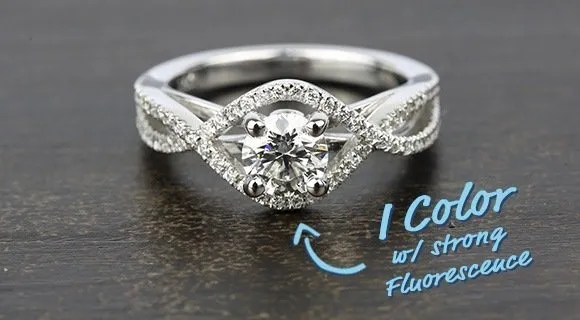
Fluorescence can enhance or detract from the beauty of a diamond. The bluish tint can improve a lower-color diamond (J-M color rated) by canceling out the faint yellow, resulting in a colorless appearance.
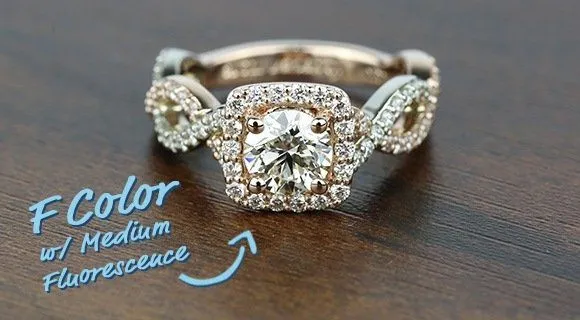
However, in a very high-color diamond (D-F color rated), fluorescence may have the opposite effect.
It’s estimated that about 30% of diamonds have some degree of fluorescence, so chances are you’ll run into some of these stones while shopping for a diamond.
How Fluorescence Affects Value of Diamonds
Sometimes, a diamond’s fluorescence will have no effect on its price, while at other times it will. Colorless diamonds, those with a color grade of D-F, are sold at a discount if they have a fluorescent glow underneath a UV light. This is because the fluorescence is seen as a flaw, so the diamond no longer holds the same value. Some people believe that fluorescence causes D-F colored diamonds to look slightly oily or hazy, which is not a desirable quality.
However, fluorescent diamonds with a color grade of I-M are actually sold at a premium. Why? The fluorescent glow of a diamond appears blue, which compliments the yellow undertones of an I-M colored diamond, making it appear whiter. Therefore, an I-M colored diamond will appear more like a higher quality stone when it has a slight fluorescence.
GIA's Fluorescence Study
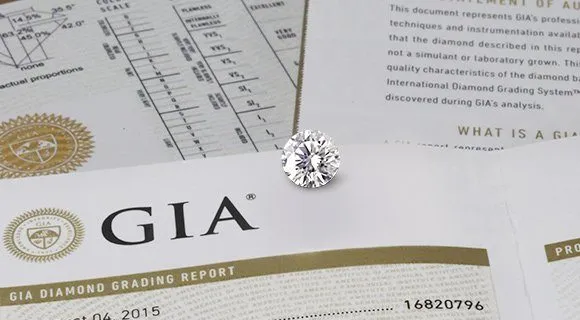
While there are many false and misinformed opinions on whether the presence of fluorescence in a loose diamond is good or bad, it’s best to consider the GIA’s in-depth, long-running, scientific study of fluorescence:
“GIA studies show that for the overwhelming majority of diamonds, the strength of fluorescence has no widely noticeable effect on appearance. In the GIA Fluorescence Study, it was found that the average person could not make a distinction between a diamond with fluorescence and a diamond without. In many instances, observers prefer the appearance of diamonds that have medium to strong fluorescence. In rare cases, some diamonds with extremely strong fluorescence may appear hazy or oily; fewer than 0.2% of the fluorescent diamonds submitted to GIA exhibit this effect.”
Differentiating Diamonds With & Without Fluorescence
According to a GIA study from 1997, the fluorescence of a diamond does not affect its appearance when looking at it from upside down. However, when the diamond is right side up, the average person may be able to spot a difference in a diamond with a strong or very strong fluorescence.
However, as we mentioned before, the difference is not a bad thing, as the fluorescence may slightly enhance the visible color of a lightly colored diamond.
Diamond Fluorescence FAQs
Certain impurities or structural defects cause fluorescence within a diamond, and the most common cause is the incorporation of elements such as nitrogen, boron, and aluminum during the formation of the diamond. Fluorescence is present in over 30% of all natural diamonds and can also be present in lab-grown diamonds.
Fluorescence can be visible to the naked eye under certain lighting conditions. Diamonds with a strong or very strong fluorescence rating will usually glow blue under UV lights (outdoors in the sun or office lighting, for example). A minority of diamonds with a medium or higher fluorescence rating may appear cloudy or hazy to the naked eye.
Fluorescence can impact the price and value of a loose diamond by up to 60% compared to diamonds without fluorescence. That's why many value-conscious buyers look for fluorescence when purchasing a diamond.
The presence of fluorescence in a diamond is not necessarily a bad thing. In fact, according to a recent study by the GIA (Gemological Institute of America), many observers prefer the appearance of diamonds with medium to strong fluorescence over diamonds with no fluorescence present.
Regardless of fluorescence, inspecting a diamond in person before you finalize your purchase is always advisable.
In the GIA diamond grading report, fluorescence is not a grading factor like the 4Cs but an identifying characteristic. The report indicates the fluorescence intensity to provide transparency and information to potential buyers.


